
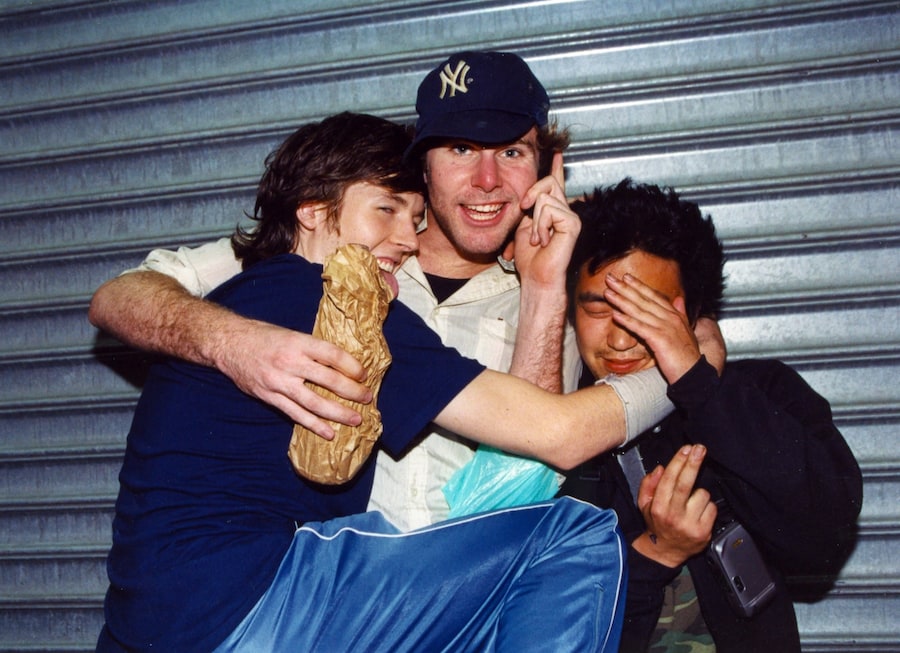
Chloë Sevigny, Spike Jonze, Amanda Lepore and Bill Strobeck feature in the photographer’s new book, which immortalises the beauty and freedom of the city that never sleeps in the years after 9/11
Alain Levitt might describe himself as ‘a square’, but his new photobook says otherwise. Published by Super Labo, Everybody’s Guilty, No One’s to Blame cracks open a window into 2000s New York at a time when graffiti, skateboarding, art, fashion, music, film and pretty much everything else mixed together in the seemingly endless night.
From Mark Gonzalez, Chloë Sevigny, Spike Jonze, Johnny Depp, Amanda Lepore, Harold Hunter and Bill Strobeck to a man on his knees in the middle of the road, praying in front of a police car, Levitt’s straight-up, democratic images put everyone on an equal footing, the perfect visual representation of life in a big city where you never know who’s around the corner.



“You know how you hear how people with social anxiety like to smoke because they need to do something with their hands? That’s like me with photography,” Levitt says over the phone. “Having a camera didn’t just give me a reason to be where I was, but it made it easier for me to be in social situations – it pretty much started because I was uncomfortable.”
Moving from LA to New York in his mid-twenties, his first job in the city was working for his sister – fashion and portrait photographer Danielle Levitt – taking candid street-style snaps which would make up her weekly New York Post column. Combine that with work behind the bar at East Village institution The Cock, occasional gigs as a party photographer and commissions for publications like Nylon, Paper and Vice, and Levitt was perfectly primed to document the energy of the era.

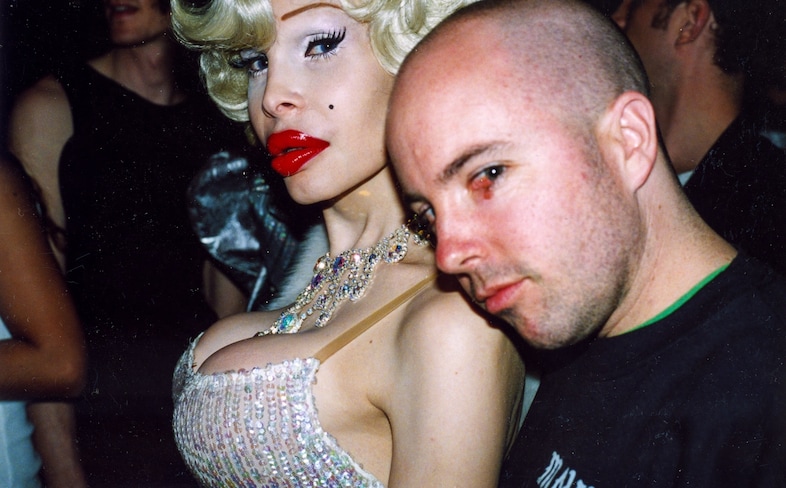
“The beauty of the time back then was this freedom that everyone seemed to have,” he says. “As the day progressed, you’d pick up people along the way – by the time the sun was starting to go down, you could have 10 or 15 people moving in a pack, inevitably making their way towards Max Fish.”
This freedom is echoed in Levitt’s loose and freewheeling flash-filled snapshots, captured on easily pocketable point-and-shoots like the Yashica T4 and the Contax T2 at a time when people were finally realising that you didn’t need a huge medium format camera to take decent photos.

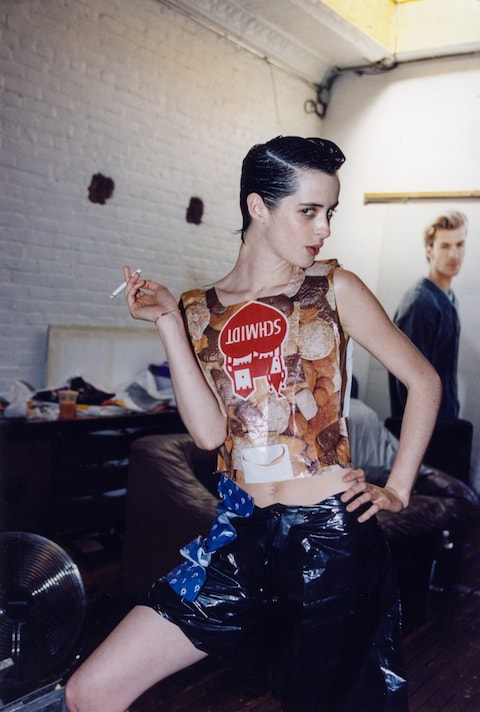
“I think it was Terry Richardson who really started that,” says Levitt. “I remember seeing some TV show where he was shooting photos for some Vogue thing with a disposable camera. That completely opened the door for a lot of us – it was just about being in the position to take the photo.”
For Levitt, that means an almost sixth-sense level of premonition. “There’s an energy that crops up that tells me that now’s the time,” he says. “It’s almost a mania where it’s like a beehive and people start moving a certain way.” Some people made it easier – and there’s a reason why Dash Snow or Kunle Martins crop up again and again in his photos. “These were people who were stars to me,” says Levitt. “They were my friends, but there was something about certain people that meant I was always a little more focused on them – even when we were just hanging out, I was always waiting for an opportunity.”

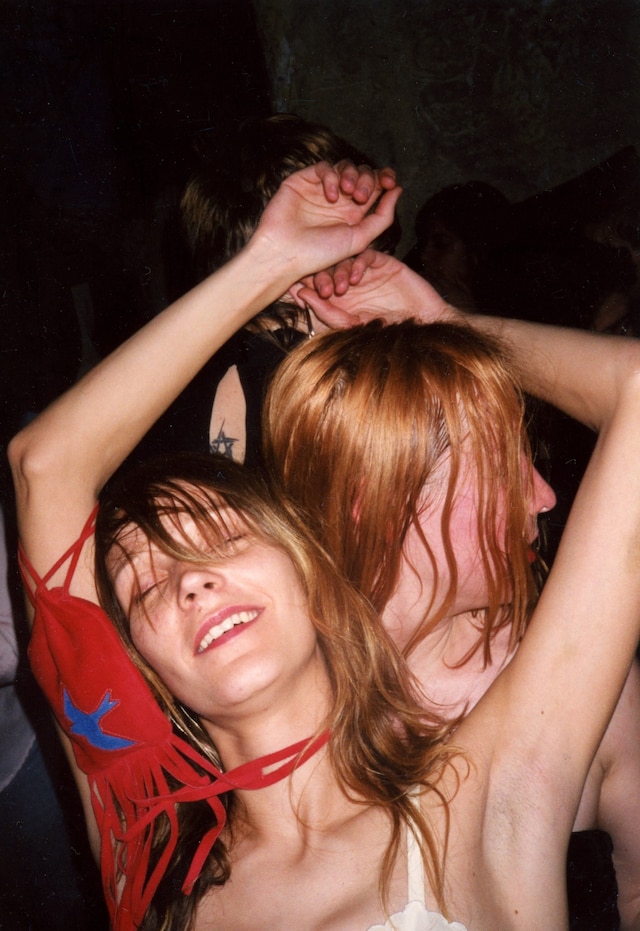
And Levitt is still looking for those opportunities today – he might be a father of two who enjoys waking up early, but he’s got none of the ‘better in our day’ sentiment that can easily take hold once you reach a certain age. “I think everyone wants to think that they had the most fun, but the beauty of New York to me is that through-line,” he says. “I know the kids are still having fun and I know that something beautiful will come out of it. There’s always going to be art created and magic happening.”
Everybody’s Guilty, No One’s to Blame by Alain Levitt is published by Super Labo and is out now.
