,%201989)
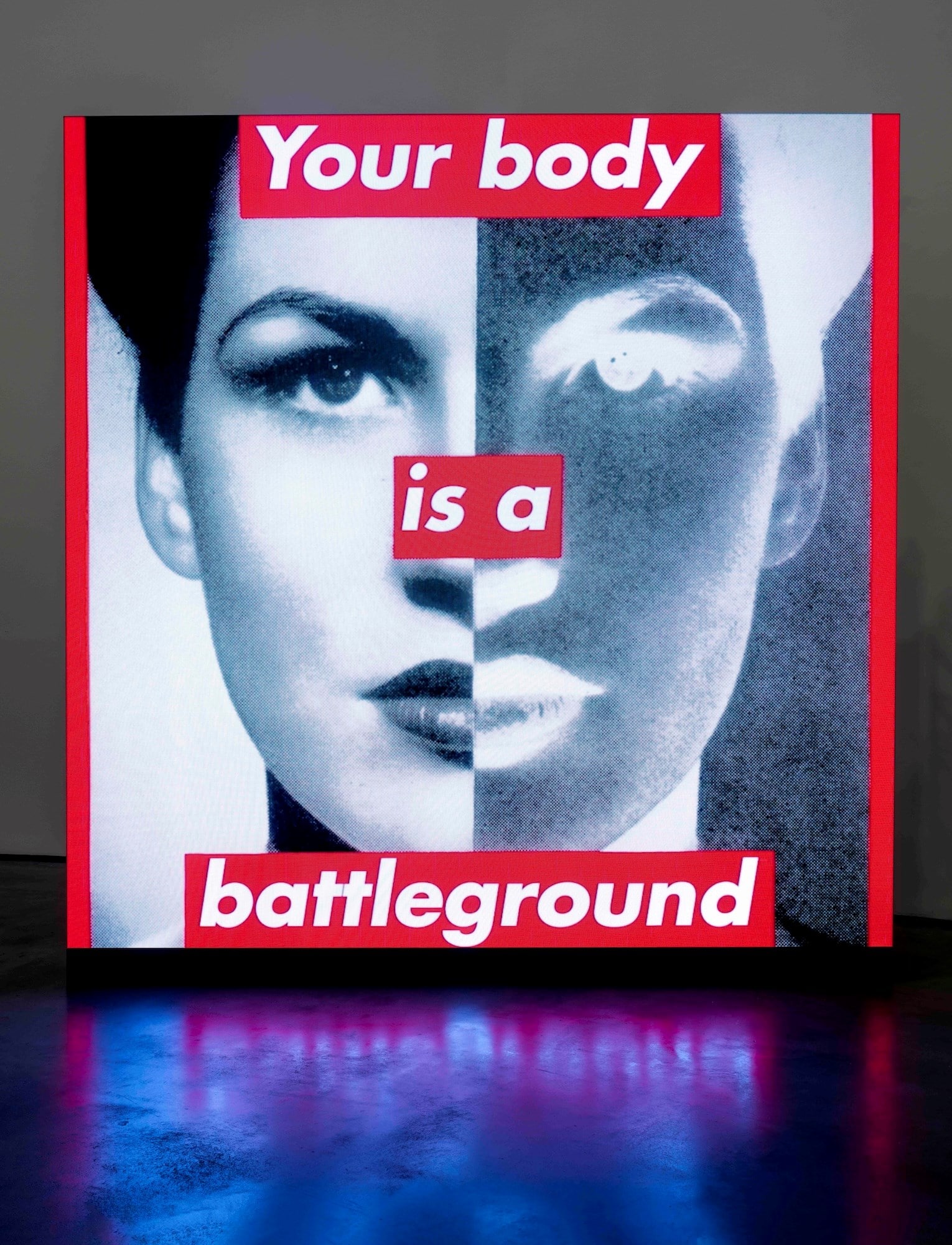
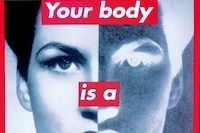
Barbara Kruger is keenly attuned to the dark undercurrents of power. Through decades of politically driven practice, the US artist has responded to seismic social upheavals and rapid developments in communication. Her iconic slogan ‘Your Body Is a Battleground’ was plastered across posters for the 1989 Women’s March on Washington; in the contemporary age of Trump and abortion rights repeals, it remains searingly relevant. Now an octogenarian, Kruger has avoided resting on her laurels, continuing to reimagine archival works for new exhibition spaces and socio-political contexts.
Her touring show Another Day. Another Night recently opened at Guggenheim Bilbao, bringing together new pieces while reimagining the design and sonics of existing ones. For this iteration of the show, the walls and floors of Frank Gehry’s mind-bending architecture are covered in Kruger’s iconic white, black and red. “I was thrilled when the work went to Bilbao because it’s a very challenging building,” she tells me, when we speak soon after the opening. Kruger calls from New York, the first time she has returned to the US after months of travelling. “It was a pleasure for me to deal with it. It just makes the install and planning more involving, and I love that.”

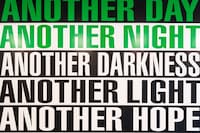
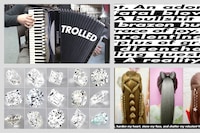
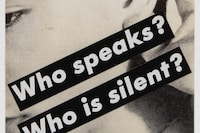

Language is a central component of her work, which features biting phrases in attention-grabbing text and longer scripts for durational pieces, sometimes alongside claustrophobically close image crops. Enormous letters tower over her viewers, no longer containable symbols on the page or iPhone screen but a commanding force that conveys the enduring influence that words hold over us. Her shows often adopt the language of their country, and at the Guggenheim, her instantly recognisable font spells out Spanish and Basque words that guide visitors through the space. “In Bilbao, it was necessary for me to make visible and understandable to the viewer how to circulate through that space,” she says. “To do the pathway in Spanish and Basque was very important.”
Such updates to the work reflect the mercurial nature of language. As well as moving between vernaculars, Kruger might refresh text pieces to reflect the changing environments and politics of their showing. Some pieces are renewed with LED screens that feature moving text. “A lot of the verbiage that was in the original ‘Your Body Is a Battleground’ poster is not in the current piece,” she says. “Language is fluid and the things we experience in our everyday lives are fluid. Sometimes the moments we are experiencing now feel like a breakthrough in horrific-ness. I try not to periodise it in a specific way, but there are certain elements that reflect back or point to the current state of affairs.”
,%202020)
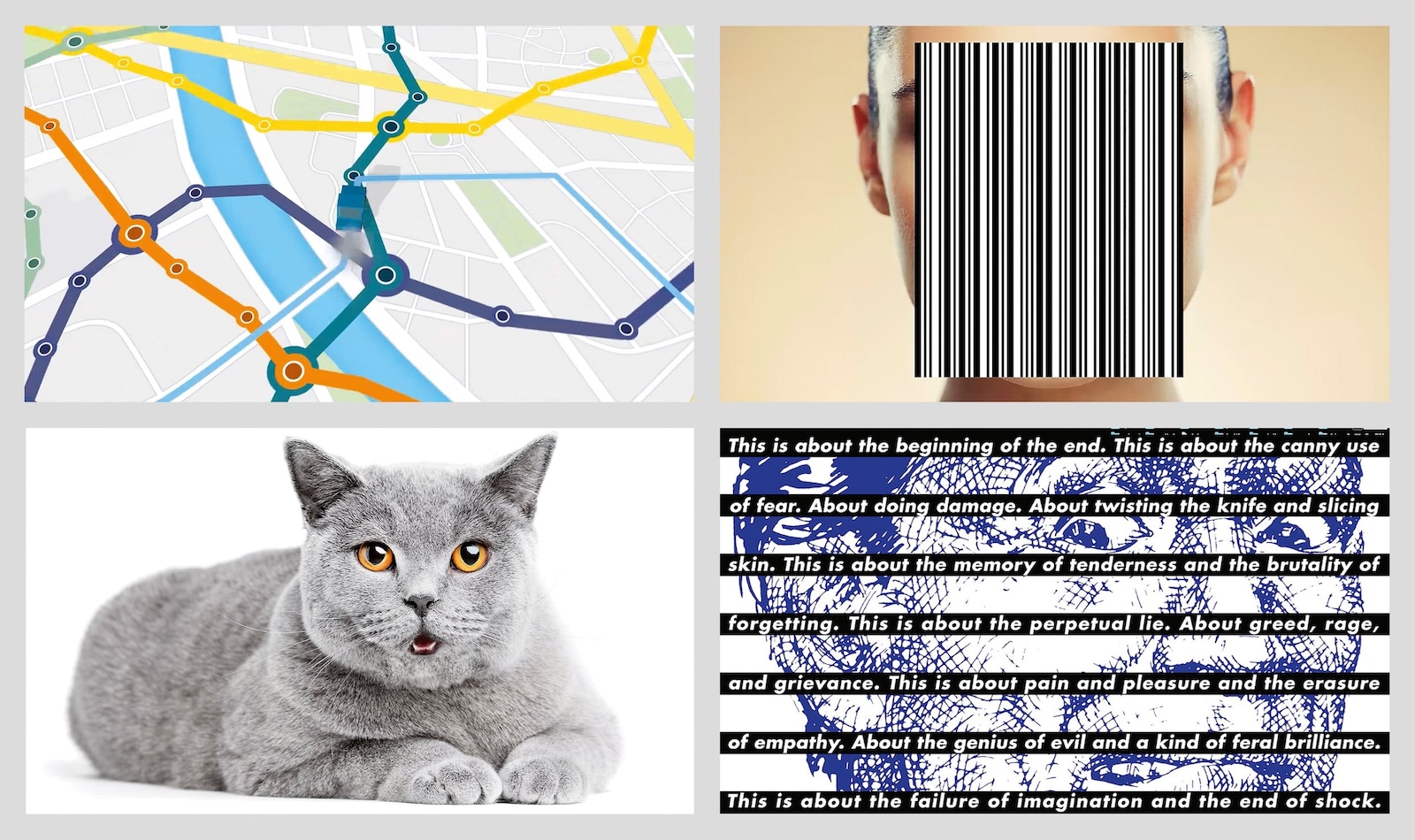
In the early years of her career, Kruger worked regularly with Conde Nast, which granted her a keen understanding of the influence of advertising, media, and beautifully packaged desire. Her works play with and critique these tools, offering a jolt from the hypnotic pull of capitalist communication. “I understood what was at that time the epitome of media culture,” she says. “That was magazine culture, which is now going through huge changes. My work was formed in a way by page turning, which could be fast or slow. But also, I understood the translation into internet culture by the seriality of editorial design.”
As it has overtaken printed media, she similarly toys with the digital world as the main driver of our attention, beliefs and spending. Kruger’s screens, often situated within immersive text-based installations that engulf the viewer, are both awe-inspiring and a terrifying reminder of our addiction to the digital image. “Our sense of time has accelerated,” she says of the internet age. “Gee, if you want your life to fly by, just go online. There is also less truth in everything. Everyone has access to what the truth ‘really’ is, and the notion of conspiracy has become conventionalised.”
“There is less truth in everything. Everyone has access to what the truth ‘really’ is, and the notion of conspiracy has become conventionalised” – Barbara Kruger

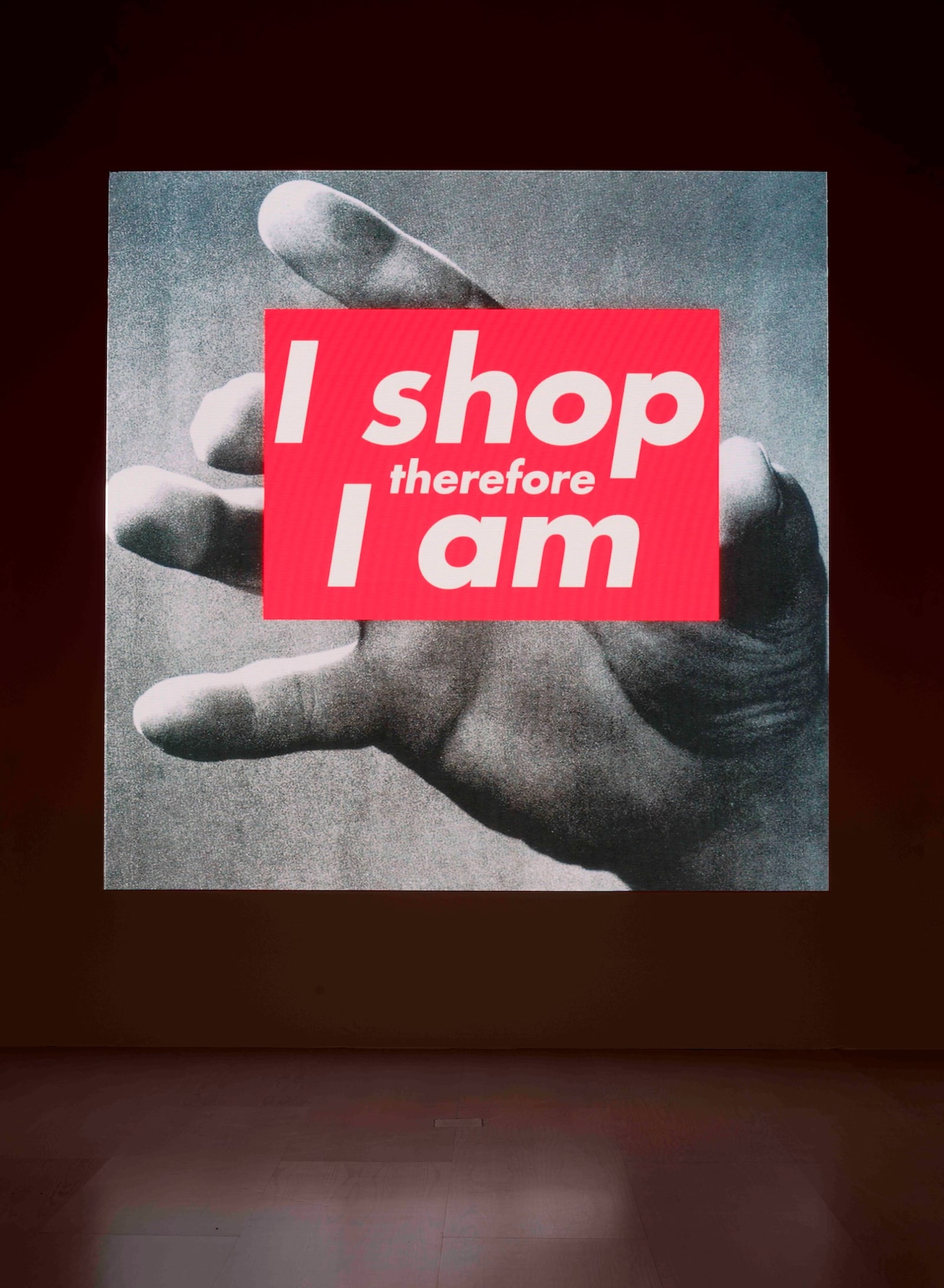
When Roe v. Wade was overturned by the US Supreme Court in 2022, Kruger was frustrated at the shock that many people felt. To her, this was inevitable, as was the broader lurch that the US and many European countries are taking to the right. “The fact that people are shocked is so distressing and really angers me,” she tells me. “No one should be shocked by any of this. For the middle and the left here in the US, this was a self-inflicted wound by being in a bubble and not understanding what was building around them. Every time people called for revolution, I’d think, ‘There is a revolution happening and it ain’t on your side! Wake up.’ The Supreme Court we have now was gifted to the right by a splintered and unstrategic left.”
Of the many artists who tackle the political and social landscape, Kruger is lauded as highly effective. At times, her pieces have shifted into real-world protest, though she feels the limits of creative expression in our current moment. “I don’t know what art can do,” she says. “I make no claims for my work. Other people make claims for my work which I don’t even agree with! The so-called art worlds – thank god, they’re plural now – are very marginalised in terms of culture. Most people don’t know the name of an artist if you walk through a town somewhere. People who go to museums are already a little more self-selected, they might have a bit more information. The arts aren’t central to the culture.”
,%201987)
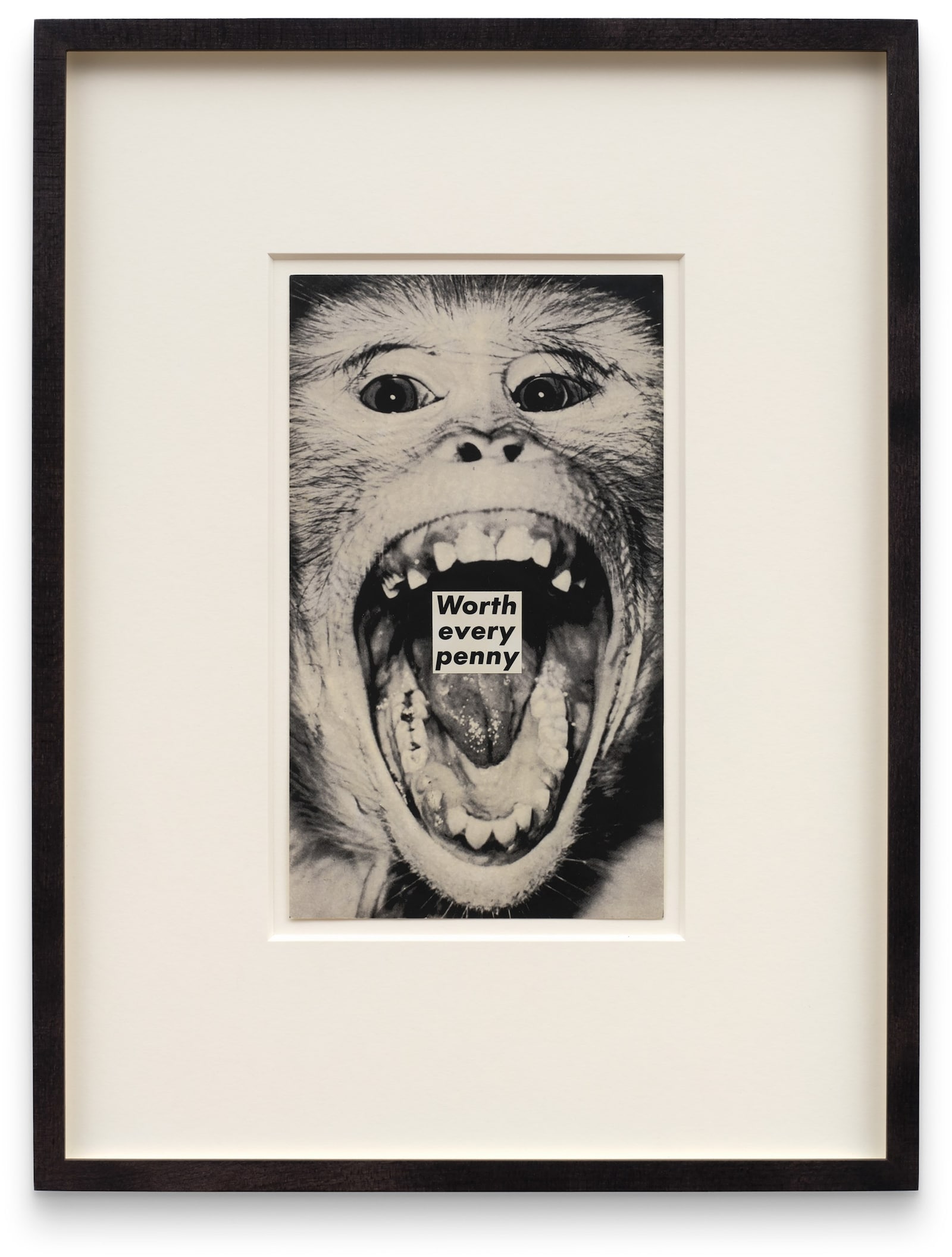
This hasn’t stopped her from engaging with the urgent issues of her time. While the individual messengers have changed, the underlying structures of control that drive her work are as loud as ever. “I’ve always been focused on how power is threaded through culture,” she says. “On a governmental level, a fame level, an educational level, a non-secular level … Of course, coming back to American discourse, the right has this ability to communicate. Trump is a brilliant brander. He is a consummate salesman. I felt it was the kiss of death to see the left and the middle misunderstand his power.”
Kruger tells me that her stratospheric ascent was a slow burn, her enduring success coming as a surprise even to her as her practice has progressed over the years. “I’m so appreciative that I’ve had these amazing opportunities a little later in life,” she says. “When I first entered the art world, it was twelve white guys in Lower Manhattan. Prominence is so arbitrary in so many ways. I never take any of this for granted.”
Another Day. Another Night by Barbara Kruger is on show at Guggenheim Bilbao until 11 September 2025.
